
Best Tools for SQLite Database Integration in Python to Buy in October 2026
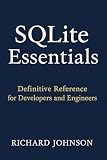
SQLite Essentials: Definitive Reference for Developers and Engineers


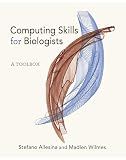
Computing Skills for Biologists: A Toolbox
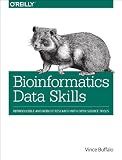
Bioinformatics Data Skills: Reproducible and Robust Research with Open Source Tools
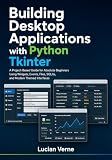
Building Desktop Applications with Python Tkinter: A Project-Based Guide for Absolute Beginners Using Widgets, Events, Files, SQLite, and Modern Themed Interfaces
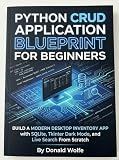
PYTHON CRUD APPLICATION BLUEPRINT FOR BEGINNERS: Build a Modern Desktop Inventory App with SQLite, Tkinter Dark Mode, and Live Search from Scratch

Python und SQLite für Einsteiger: Ein verständlicher Leitfaden für Anfänger zur Arbeit mit SQLite-Datenbanken in Python - von den Grundlagen bis zu praxisnahen Projekten. (German Edition)
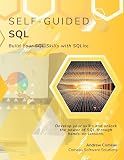
Self-Guided SQL: Build Your SQL Skills with SQLite

ASP.NET MVC using .NET 8: Getting Started with a Small Project using SQLite and Entity Framework
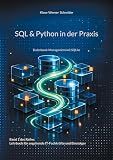
SQL & Python in der Praxis: Datenbank-Management mit SQLite (Lehrbuch für angehende IT-Fachkräfte und Einsteiger 1) (German Edition)
To connect to a SQLite database in Python, you can follow these steps:
- Import the SQLite3 module: Begin by importing the SQLite3 module in your Python script. You can achieve this by including the following line at the top of your code:
import sqlite3
- Establish a connection: Next, you'll need to establish a connection to the SQLite database file. This can be done using the connect() function provided by the SQLite3 module. Specify the path to your database file as an argument:
connection = sqlite3.connect('path_to_database_file.db')
Replace 'path_to_database_file.db' with the actual file path and name of your SQLite database.
- Create a cursor object: A cursor is used to execute SQL queries and fetch the results. Create a cursor object using the cursor() method on the connection:
cursor = connection.cursor()
- Execute SQL queries: With the cursor object, you can execute SQL queries on the connected SQLite database. Use the execute() method on the cursor and pass the desired SQL query as an argument:
cursor.execute('SELECT * FROM table_name')
Replace 'SELECT * FROM table_name' with your SQL query.
- Fetch query results (if required): If your SQL query is a SELECT statement and you want to retrieve the query results, you can use the fetchall() or fetchone() methods on the cursor:
results = cursor.fetchall()
The fetchall() method returns all the results, whereas fetchone() returns only the first row.
- Commit the changes (if required): If you have made any modifications to the SQLite database (e.g., inserting, updating, or deleting records), call the commit() method on the connection to save those changes:
connection.commit()
- Close the connection: Finally, close the database connection using the close() method on the connection object:
connection.close()
Remember to catch and handle any exceptions that may arise while working with the SQLite database in Python.
How do you update data in a SQLite table using Python?
To update data in SQLite table using Python, you can follow these steps:
- Import the sqlite3 module:
import sqlite3
- Connect to the SQLite database:
conn = sqlite3.connect('your_database.db')
- Create a cursor object:
cursor = conn.cursor()
- Write an SQL query to update the data:
sql_query = "UPDATE table_name SET column1 = value1, column2 = value2 WHERE condition"
Replace table_name with the name of the table you want to update. Specify the columns to be updated, along with their new values. Use the WHERE clause to conditionally update specific rows.
- Execute the query:
cursor.execute(sql_query)
- Commit the changes and close the connection:
conn.commit() conn.close()
Here's an example that updates a specific row in a table called "students" with an ID of 1, setting the "age" column to 20:
import sqlite3
conn = sqlite3.connect('your_database.db') cursor = conn.cursor()
sql_query = "UPDATE students SET age = 20 WHERE ID = 1" cursor.execute(sql_query)
conn.commit() conn.close()
Make sure to replace "your_database.db" with the actual path/name of your SQLite database file.
What is a cursor in SQLite Python?
In SQLite Python, a cursor is an object that allows interaction with the SQLite database. It enables the execution of SQL statements and fetches the data returned by those statements. The cursor acts as a reference to a specific position within the result set of a query, and it can be used to manipulate and retrieve data from the database tables.
Can you provide an example of connecting to an in-memory SQLite database in Python?
Certainly! Here's an example of how to connect to an in-memory SQLite database using the sqlite3 module in Python:
import sqlite3
Create an in-memory SQLite database connection
conn = sqlite3.connect(":memory:")
Create a cursor object to execute SQL statements
cursor = conn.cursor()
Create a table
cursor.execute("CREATE TABLE students (id INT, name TEXT)")
Insert data into the table
cursor.execute("INSERT INTO students (id, name) VALUES (1, 'John')") cursor.execute("INSERT INTO students (id, name) VALUES (2, 'Alice')") cursor.execute("INSERT INTO students (id, name) VALUES (3, 'Bob')")
Commit the changes to the database
conn.commit()
Execute a SELECT query
cursor.execute("SELECT * FROM students") rows = cursor.fetchall()
Print the fetched data
for row in rows: print(row)
Close the cursor and the connection
cursor.close() conn.close()
In this example, we first create an in-memory SQLite database by passing the ":memory:" special name to the connect() method of the sqlite3 module. Then we use the cursor object to execute SQL statements such as creating a table, inserting data, and querying data. Finally, we commit the changes to the database using the commit() method, fetch the data using the fetchall() method, and print the fetched data. Finally, we close the cursor and the connection.
How do you fetch all records from a SQLite table in Python?
To fetch all records from a SQLite table using Python, you can use the SELECT statement with the fetchall() or fetchall() method on a database cursor object. Here's an example:
import sqlite3
Connect to the SQLite database
conn = sqlite3.connect('database.db') c = conn.cursor()
Execute a SELECT statement to fetch all records from a table
c.execute("SELECT * FROM table_name") rows = c.fetchall()
Print the fetched records
for row in rows: print(row)
Close the database connection
conn.close()
Make sure you replace 'database.db' with the path to your SQLite database file and 'table_name' with the name of the table you want to fetch records from.