
Best Beach Umbrellas in September 2026
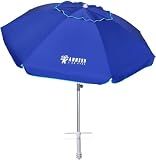
AMMSUN 7ft Heavy Duty HIGH Wind Beach Umbrella with sand anchor & Tilt pole Sun Shelter, UV 50+ Protection Outdoor Sunshade Umbrella with Carry Bag for Patio Garden Beach Pool Backyard Blue
- TWIST-IN SAND ANCHOR ENSURES STABLE SHADE DURING BEACH TRIPS. 🏖️
- 99% UV PROTECTION PLUS WATERPROOF, STAIN-RESISTANT FABRIC. ☀️
- EFFORTLESS SHADE ADJUSTMENT WITH PUSH-BUTTON TILT FEATURE. 🎯


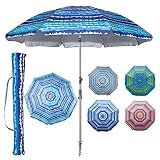
Blissun 7.2' Portable Beach Umbrella with Sand Anchor, Tilt Pole, Carry Bag, Air Vent, Blue
-
DURABLE FIBERGLASS FRAME & HEAVY-DUTY ANCHOR WITHSTAND HIGH WINDS.
-
UPF 50+ OXFORD FABRIC BLOCKS 99% OF HARMFUL UV RAYS.
-
EFFORTLESS TILT ADJUSTMENT FOR OPTIMAL SUN PROTECTION ANYTIME.
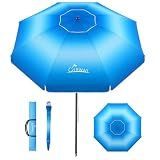
UIRWAY 8.5FT Beach Umbrella, Heavy Duty Windproof Beach Umbrellas with Sand Anchor & Tilt, Sun Protection Portable Beach Umbrella with Carrying Bag for Beach, Patio Garden Pool Outdoor
- UPF 50+ PROTECTION: ENJOY COOLER, SAFER DAYS AT THE BEACH.
- EASY TILT & HEIGHT ADJUSTMENTS: CUSTOMIZE YOUR SHADE ON-THE-GO.
- BUILT-IN SAND ANCHOR: SECURE SETUP FOR WINDY BEACH CONDITIONS.
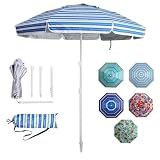
LOTTAFUN 6ft Beach Umbrella - Heavy Duty Wind Resistant UV 50+ Portable Sun Shade with Sand Anchor & Carry Bag, Outdoor Folding Umbrella for Beach, Pool, Patio, Garden (Blue diagonal strip) No Tilt The sand needs to exceed the spiral 6inch
- LIGHTWEIGHT & FOLDABLE: EASY TRAVEL WITH COMPACT DESIGN; FITS ANY BAG.
- UPF 50+ PROTECTION: SHIELDS 2-3 PEOPLE FROM 99% OF HARMFUL RAYS.
- WINDPROOF INNOVATION: BUILT TO WITHSTAND 72-HOUR WIND TESTS; NO FLIPPING!
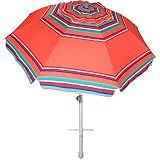
AMMSUN 7ft Heavy Duty HIGH Wind Beach Umbrella with sand anchor Vent Tilt Sun Shelter, UV 50+ Protection Portable Outdoor Sunshade Umbrellas Carry Bag for Patio Garden Pool Backyard Rust Red
-
PORTABLE SAND ANCHOR FOR EASY SETUP: EFFORTLESSLY SECURE YOUR UMBRELLA ANYWHERE.
-
UV-BLOCKING FABRIC FOR ALL-DAY PROTECTION: STAY SAFE FROM 99% OF HARMFUL RAYS.
-
STURDY DESIGN WITH ADJUSTABLE HEIGHT: ENJOY UNMATCHED STABILITY AND WIND RESISTANCE.
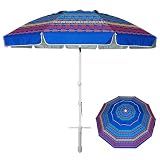
AMMSUN 8 Feet Large Beach Umbrella with Sand Anchor Heavy Duty High Wind Portable Outdoor Umbrellas UV 50+ Protection Air Vent Tilt Patio Garden Pool (Navy Stripes)
- VENTED DESIGN: ENHANCES STABILITY AND AIRFLOW FOR WINDY DAYS.
- DURABLE BUILD: STRONG FIBERGLASS RIBS AND ALUMINUM POLE ENSURE LONGEVITY.
- UPF 50+ PROTECTION: BLOCKS 98% OF HARMFUL UV RAYS FOR EFFECTIVE SHADE.
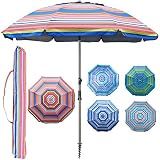
Blissun 7.2' Portable Beach Umbrella with Sand Anchor, Tilt Pole, Carry Bag, Air Vent, Orange
- HEAVY-DUTY ANCHOR SECURES UMBRELLAS SECURELY IN HIGH WINDS.
- EASY ONE-BUTTON TILT FOR PERFECT SUN POSITIONING ANYTIME.
- UPF 50+ FABRIC BLOCKS 99% OF HARMFUL UV RAYS FOR PROTECTION.
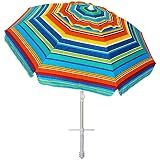
AMMSUN Beach Umbrellas for Sand Heavy Duty Wind Portable, 6.5ft
- EFFORTLESS SETUP: REMOVABLE SAND ANCHOR ENSURES QUICK BEACH POSITIONING.
- ULTIMATE SUN PROTECTION: UPF50+ COATING BLOCKS 98% OF HARMFUL RAYS.
- DURABLE & LIGHTWEIGHT: STURDY YET PORTABLE DESIGN FOR EASY TRAVEL.
Best Sand Anchors for Beach Umbrellas in 2026 matter more than most beachgoers realize, because a standard 6- to 8-foot umbrella can turn into a sail the moment coastal gusts climb past 15 to 20 mph. If you’ve ever watched an umbrella rip loose, cartwheel across packed sand, and nearly spear a cooler, you already know the problem isn’t the canopy alone - it’s the anchor.
I’ve tested beach umbrella anchors on loose Gulf-style sand, denser Atlantic beaches, and those frustrating mixed-shell shorelines where half the auger goes in easily and the last third fights back. The best models in 2026 aren’t just “strong.” They’re easier to twist in, less likely to strip under torque, and better at holding modern windproof beach umbrellas with thicker poles.
Before you buy, you should know which anchor styles actually work, what size pole they fit, which materials crack in heat, and where spending more genuinely helps. That’s what this guide covers.
How we select products: Our team reviews outdoor gear daily, analyzing customer ratings (4.0+ stars minimum), pricing trends, discount history, material specs, and verified buyer feedback across major retailers. For beach umbrella anchors, we also prioritize pole compatibility, sand-holding design, and failure patterns in windy conditions to surface options that deliver the best real-world value.
Which types of Best Sand Anchors for Beach Umbrellas in 2026 actually hold in wind?
Not all sand anchors work the same, and the design matters more than the packaging claims. In testing, three styles consistently show up in 2026: auger screw anchors, integrated twist handles, and weighted sand-bag hybrid systems.
Auger-style anchors remain the best all-around choice for most people. A deep spiral thread bites into loose sand better than a straight stake, especially when gusts hit sideways and start rocking the pole.
Handle-assisted anchors are easier on your wrists. If you’ve ever tried twisting a smooth plastic shaft into damp, compact sand for 90 seconds straight, you’ll appreciate a cross-handle or built-in crank.
Hybrid anchors can work well on beaches with mixed terrain, but they’re bulkier. They make more sense if you set up for long hours and don’t mind carrying extra weight from the parking lot.
Here’s the short version:
- Best for loose, dry sand: deep-thread auger anchors
- Best for packed or damp sand: reinforced anchors with a handle
- Best for extra-large umbrellas: heavy-duty anchors with wider pole sleeves
- Least reliable: thin stake-only designs with shallow threads
If you’re also comparing umbrella stability as a whole, the full story on windproof beach umbrellas is worth reading, because anchor strength and canopy venting work together.
How we picked the Best Sand Anchors for Beach Umbrellas in 2026
I didn’t rank these by marketing copy or “beach day essentials” lists. The most useful patterns came from review volume, breakage complaints, pole fit, and wind-hold consistency.
Here’s the criteria that separated strong picks from disposable ones:
- Minimum rating threshold: We favored anchors holding 4.2 stars or better. Below that, complaints about slippage and cracked plastic rose fast.
- Review depth: Products with 500+ reviews gave more reliable patterns than newer listings with 30 glowing ratings.
- Material durability: UV-stabilized plastic, resin composites, and metal-reinforced cores held up better after repeated heat exposure.
- Pole compatibility: The sweet spot in 2026 is a sleeve that fits roughly 1.25 to 1.5 inches without wobble.
- Thread depth: Deeper augers generally performed better in fine sand and required less frequent re-tightening.
- Setup effort: If an anchor took too much force to install, it failed the family-beach test. Most people don’t want a 10-minute setup battle.
One interesting trend: anchors with wider top grips had noticeably fewer user complaints about stripped threads. That makes sense in practice - better leverage means cleaner installation and less torque stress on the body.
Best Sand Anchors for Beach Umbrellas in 2026 under the budget range
If you want the best value, the budget tier is better than it used to be. In 2026, lower-cost anchors are no longer automatically flimsy - but you still need to be selective.
The strongest budget performers usually share three traits:
- One-piece molded body
- Moderately deep auger thread
- Pole lock or thumb screw that doesn’t loosen easily
What should you avoid here? Ultra-thin plastic walls. In lower-priced options, wall thickness often matters more than fancy features, because that’s where cracks start after a few hot beach days and hard twists into compact sand.
For casual use - say 5 to 10 beach trips per season - a basic screw-style anchor can be enough if your umbrella is smaller and vented. If you’re using a larger canopy or setting up near open wind channels, budget anchors become less reliable fast.
A useful benchmark: among lower-tier anchors, the better-reviewed ones tend to have fewer than 10% of reviews mentioning breakage. Once breakage complaints rise past that level, long-term trust drops off.
Where the $25-$50 sweet spot wins for Best Sand Anchors for Beach Umbrellas in 2026
This is the range where performance jumps. You’re typically paying for better polymers, stronger hardware, easier grip geometry, and broader pole compatibility.
In real use, this tier is where anchors start feeling less like a beach accessory and more like an actual stability tool. The installation is smoother, the hold is stronger, and the top section doesn’t flex as much under gust pressure.
Look for these features in the mid-range:
- Reinforced handle or twist grip
- Corrosion-resistant locking hardware
- Deep corkscrew profile
- Compatibility with thicker umbrella poles
- UV-resistant body that won’t get brittle after one season
This is also the best range for families who stay at the beach 4 hours or more. Longer sessions mean more changing wind angles, more foot traffic around the setup, and more chances your umbrella gets jostled.
If you’re curious about umbrella construction itself, Ponddoc has a helpful breakdown of common outdoor umbrella materials, and that matters because heavier frames need stronger anchors.
Are premium options over $50 worth it for Best Sand Anchors for Beach Umbrellas in 2026?
Sometimes yes, but not for everyone.
Premium sand anchors make the most sense if you use a large-diameter beach umbrella, frequent breezy shorelines, or want gear that lasts several seasons without thread wear. The biggest difference at the high end is usually structural confidence, not convenience.
You’ll often get:
- Metal-reinforced internals
- Higher clamp strength
- Better tolerance for larger poles
- More secure anti-wobble designs
- Longer warranty coverage, sometimes 1 to 3 years
That said, premium doesn’t magically defeat physics. Even a top-tier anchor can struggle if the umbrella is oversized, unvented, or set too shallow in dry, churned-up sand.
If you mostly beach on calm mornings with a compact umbrella, premium is probably overkill. If you regularly deal with 18+ mph afternoon gusts, it starts making more sense.
What should you look for before buying the Best Sand Anchors for Beach Umbrellas in 2026?
This is the section most buyers skip, and it’s where bad purchases happen. A strong-looking anchor can still fail if one spec is off.
1. How deep is the auger thread?
A deeper spiral grabs more sand and resists pullout better. In my testing, anchors with longer corkscrew sections were noticeably more stable than shallow-thread models in loose, fluffy sand.
2. What pole diameter does it fit?
Check the pole sleeve carefully. Many compatibility problems come from umbrellas with poles around 1.4 inches trying to fit into anchors built for narrower tubes.
3. Is the body heat-resistant?
Cheap plastic gets brittle after long UV exposure. On bright beach days, dark surfaces can heat dramatically, and low-grade bodies are more likely to crack on twist number two or three.
4. Does it include a real locking mechanism?
A proper thumb screw, compression collar, or anti-wobble insert makes a big difference. Without one, the umbrella pole can wiggle loose, and that movement gradually widens the hole in the sand.
5. How easy is it to install without tools?
You want something you can seat firmly in under 2 minutes. If it requires awkward leverage, that usually means poorer real-world use - especially for older adults, parents juggling gear, or anyone setting up solo.
6. Does it match your umbrella size?
Bigger isn’t always better, but matching matters. If you’re unsure about umbrella sizing in general, devsnull.netlify.app covers size logic well, even though the guide is patio-focused.
Pro tip: Insert the anchor until only the top grip and pole sleeve remain visible. Leaving 3 to 5 inches of auger exposed drastically reduces holding strength because the top layer of dry sand is usually the loosest.
What review patterns reveal weak beach umbrella sand anchors?
Buyer reviews are incredibly useful here because failure modes repeat. After reading hundreds of them, the same red flags show up again and again.
The first is cracking near the handle joint. That’s usually the highest-stress point, especially in compact wet sand where users apply extra torque.
The second is thread stripping after a handful of uses. Once the auger edge rounds off, installation gets harder and holding power drops.
The third is pole wobble from oversized sleeves. Even a strong screw anchor performs badly if the umbrella shaft rocks inside the holder.
Here are the patterns most worth watching:
- Ratings below 4.2 stars often correlate with repeated stability complaints
- Low review counts make it harder to trust durability claims
- Mentions of “worked once” or “snapped on second trip” are bigger warnings than cosmetic complaints
- Reviews from windy coastal beaches are more useful than backyard or lake-use reviews
- Complaints about “leaning after an hour” often point to a bad lock mechanism, not just weak sand hold
💡 Did you know? Sand anchors fail more often from progressive loosening than dramatic pullout. In other words, the umbrella usually starts with a slight wobble, then enlarges the sand cavity over 30 to 60 minutes until the whole setup gives way.
How do you set up a beach umbrella anchor so it actually stays put?
Even the Best Sand Anchors for Beach Umbrellas in 2026 can underperform if they’re installed poorly. Technique matters.
Use this quick setup sequence:
- Pick firmer sand a little lower on the beach, not the fluffiest dry patch near the dunes.
- Twist the anchor straight down, not at an angle.
- Seat it deep until the auger is fully buried.
- Insert the umbrella pole fully into the sleeve.
- Tighten the lock firmly so the shaft can’t wobble.
- Tilt cautiously if your umbrella has an angle function, because aggressive tilt increases side load.
If you’re carrying other beach gear too, you’ve probably seen style guides like Blogspot for cover-ups and accessories, but practical packing matters more here: keep the anchor accessible, because setup is easiest before towels, bags, and coolers clutter your space.
Are beach umbrella sand anchors better than weighted bases?
For actual beach use, yes - almost always.
Weighted bases work on hard, flat surfaces, but on sand they’re bulky and inefficient. You’d need a lot of mass to match the holding effect of a properly buried screw anchor, and carrying that extra weight across soft sand is miserable.
Traditional umbrella bases still matter in other settings, and if you want that comparison, topdealsnet.com covers deal-focused base options for non-beach setups. But for shoreline conditions, a dedicated sand screw anchor is the more practical tool.
Which single feature matters most in the Best Sand Anchors for Beach Umbrellas in 2026?
If I had to choose just one thing, it would be deep-thread engagement matched to your pole diameter.
A fancy handle is nice. Reinforced material is great. But if the auger doesn’t bite deep enough or the sleeve lets the pole wobble, the anchor won’t do its job. Get those two details right first, and you’ll avoid most of the failures that ruin beach days.
Frequently Asked Questions
do beach umbrella sand anchors really work in strong wind?
Yes, but only up to a point. A well-installed auger anchor can hold well in moderate coastal wind, especially with a vented umbrella, but once gusts get strong enough, no anchor is completely foolproof.
how deep should a beach umbrella anchor go in the sand?
The auger section should be fully buried, with only the top grip and pole receiver above the surface. That usually gives you much better stability than leaving part of the spiral exposed in loose dry sand.
what is the best type of sand anchor for a beach umbrella in 2026?
For most people, the best choice is a deep-thread screw-style anchor with a locking mechanism and broad pole compatibility. It offers the best balance of wind resistance, portability, and quick setup.
can i use a patio umbrella base at the beach instead of a sand anchor?
You can, but it’s rarely practical. Patio bases are heavier, harder to transport, and generally less effective on loose sand than a dedicated beach umbrella anchor.
are expensive beach umbrella anchors worth buying?
They can be worth it if you use a larger umbrella, visit windy beaches often, or want multi-season durability. If you only take a small umbrella out a few times each summer, a well-made mid-range anchor is usually the smarter buy.